Latest News and Feature Stories
Posted on May 15th, 2013 in Accomplishments, Climate Impacts, People and Infrastructure, Sea Level Rise
On May 7, 2012, NCCOS’s Ms. Carol Auer received a NOAA Distinguished Career Award for her long-term commitment to advancing the Nation’s preparedness for the ecosystem impacts of sea level rise. Ms. Auer’s dedicated career in the National Ocean Service spanned thirty-five years analyzing tides and water levels for the Nation and pioneering studies on the [...]
Continue reading
Posted on May 8th, 2013 in Ecology & Oceanography, Forecasting, Harmful Algal Blooms, News Clips, Outreach, Sensor Development, Sponsored Research
A NCCOS-funded harmful algal bloom forecasting project is providing key information that one day will help scientists overcome the challenges of HAB forecasting and predict when and where blooms may occur. The prestigious Monterey Bay Research Institute (MBARI), a partner in the research, recently advertised the NCCOS harmful algal bloom forecasting project in a press [...]
Continue reading
Posted on May 8th, 2013 in Coastal Pollution, Pathogens & Microbes
Antibiotics may enter marine ecosystems from wastewater systems, agricultural run-off (particularly from concentrated animal farming operations), as well as direct release from aquaculture waters. NCCOS intern and University of South Carolina Masters of Public Health candidate, Keri Lydon presented findings from an NCCOS study focused on determining antibiotic resistance in the environment and overall risks to marine [...]
Continue reading
Posted on May 8th, 2013 in Coastal Pollution, Ecological Forecasts & Tools, Ecosystem Management, Hypoxia & Eutrophication, Sponsored Research
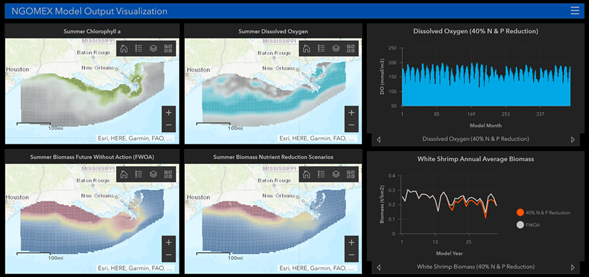
In overlapping venues on 17-18 April 2013, NCCOS co-led the Forum for Gulf of Mexico Hypoxia Research Coordination and Advancement, and represented NOAA at the U.S. Mississippi River Gulf of Mexico Watershed Nutrient (Hypoxia) Task Force Spring 2013 Public Meeting; both meetings aimed at advancing management mandates of the Hypoxia Task Force to reduce the [...]
Continue reading
Posted on May 8th, 2013 in Ecology & Oceanography, Harmful Algal Blooms, Sponsored Research
Seeing the photos from the record-breaking algal bloom on Lake Erie in 2011 was like déjà vu for me. I grew up in the Great Lakes region in the 1960s and 1970s and remember the days when Lake Erie was declared “dead.” I later learned that the green scum that plagued the lake during summer [...]
Continue reading
Posted on May 8th, 2013 in Coastal Pollution, Ecosystem Management, Harmful Algal Blooms, Hypoxia & Eutrophication, Marine Biotoxin Impacts, Seagrasses, Sponsored Research
‘Red tide’ and a loss of sea grass account for some manatee deaths, but researchers believe undiscovered factors are also at play. A record number of endangered manatees are dying in Florida’s waterways. So far this year, 582 manatees have died, more than any year on record, according to preliminary numbers from the Florida Fish [...]
Continue reading
Posted on May 8th, 2013 in Ecological Forecasts & Tools, Ecosystem Management, Forecasting, Harmful Algal Blooms, Sponsored Research
On May 2, 2013, NOAA’s North Atlantic Regional Collaboration Team convened a workshop at the Cooperative Institute for the North Atlantic Region in Woods Hole, MA to explore regional capabilities and needs for ecological forecasting. Long-term science support from NOS’s National Centers for Coastal Ocean Science has led to a Harmful Algal Bloom forecast currently [...]
Continue reading
Posted on May 7th, 2013 in Ecology & Oceanography, Harmful Algal Blooms, International, Marine Biotoxin Impacts, Monitoring & Event Response, People and Infrastructure, Prevention, Control & Mitigation
On April 28-30, 2013, Dr. Robert Magnien of NOAA’s National Centers for Coastal Ocean Science (NCCOS) chaired the Intergovernmental Oceanographic Commission’s Intergovernmental Panel on Harmful Algal Blooms (IPHAB). This year, IPHAB reviewed progress on harmful algae priorities and initiatives in partnership with other international organizations such as International Council for the Exploration of the Sea (ICES) and the [...]
Continue reading