
Persistent concerns about toxins in Toledo, Ohio’s drinking water following August’s large, cyanobacteria bloom in Lake Erie prompted a follow-up investigation supported by NCCOS. At the time, the bloom led the City of Toledo to issue a two-day, drinking water ban for 400,000 people in Toledo and surrounding areas after drinking water samples showed high levels of microcystin – a toxin known to come from the bloom.
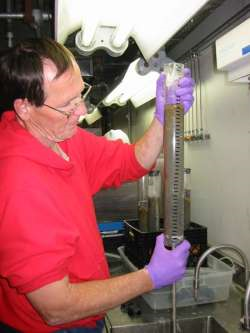
NCCOS Harmful Algal Bloom Event Response funding enabled NOAA’s Great Lakes Environmental Research Laboratory to partner with a State University of New York (SUNY) cyanotoxin rapid response service lab, previously established by NCCOS, to analyze water samples taken around a water intake managed by the City of Toledo.
The SUNY lab analyzed the samples for a suite of cyanotoxins known or suspected to have human health implications. The team found elevated levels of microcystin-LR and some of its variants, which both exceeded World Health Organization guidelines, but otherwise detected no cyanotoxins.
NOAA and the SUNY rapid response lab immediately shared the findings with Toledo, the Ohio Environmental Protection Agency, and other regional utility managers in need of timely, accurate data to ensure the delivery of safe drinking water to municipalities along the shores of Lake Erie.
The findings will be available in a future peer-reviewed publication. For more information, contact Marc.Suddleson@noaa.gov.