
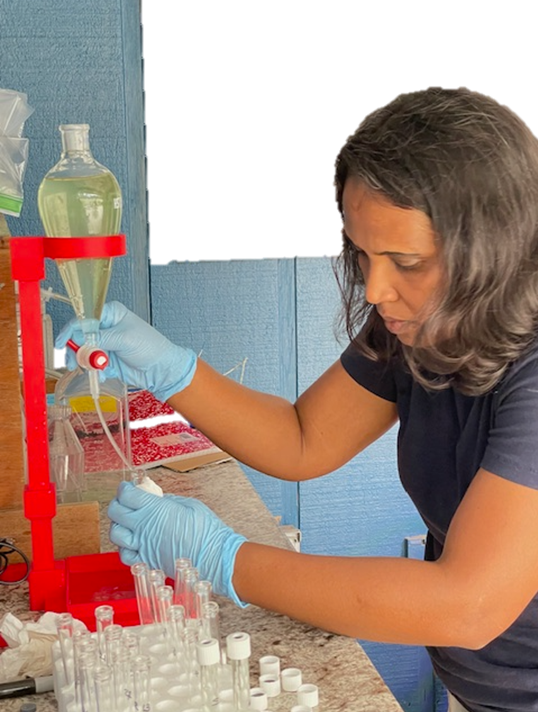
We are seeking to understand the physical and biogeochemical mechanisms driving emerging hypoxia formation on the nutrient-poor West Florida Shelf. We will also determine how multiple stressors (especially, hypoxia, harmful algal blooms, and warming) affect key fish species and their habitat and what might change the current paradigm from occasional to annual hypoxia.
Why We Care
Dissolved oxygen concentrations in both open ocean and coastal waters have been declining since at least the 1950s. This oxygen loss, or deoxygenation, is one of the most important changes occurring in the ocean, and has altered the abundances and distributions of marine species. Hypoxia (low oxygen, less than 2 mg/L) in many estuarine and coastal systems has been historically linked to coastal eutrophication, in which anthropogenic nutrient inputs stimulate primary productivity and exacerbate oxygen depletion. Over the past two decades, warming ocean temperatures and other changing environmental conditions have emerged as new drivers of hypoxia in coastal waters.
A recent analysis of water quality data on the West Florida Shelf revealed that hypoxia was present in 5 of the 16 years examined and was likely related to large, toxic algal blooms (Karenia brevis) that were sustained throughout summer. The emergence of hypoxia on the West Florida Shelf defies the conventional understanding of coastal hypoxia. Increasing water temperatures makes it easier for hypoxia to develop by increasing stratification and reducing oxygen solubility. While much is unknown about the mechanisms driving the emerging hypoxia, the combination of more frequent hypoxia, sustained toxic K. brevis blooms, and warming will multiply the stress and pressure on the diverse and productive fisheries of the West Florida Shelf.
What We Are Doing
Our goal is to understand the physical and biogeochemical mechanisms that can drive hypoxia formation on nutrient-poor continental shelves like the West Florida Shelf under changing environmental conditions. Specific objectives include measurements to determine oxygen consumption due to decaying harmful algal blooms, development of coupled hydrodynamic–biogeochemical–harmful algal bloom models for hypoxia prediction, and development of habitat models that can assess the impacts of hypoxia and other related stressors on important fish species.
We will conduct field experiments to determine the relationships between the rate of dissolved oxygen change in the water column and particulate organic matter and bacterial and phytoplankton bloom concentration. The validated model will be used to conduct hindcast simulations to understand hypoxia formation during certain years and examine its connections to harmful algal blooms, physical processes regulating stratification development, and other processes such as extreme weather events (i.e., hurricanes and tropical storms). It will also be used to conduct scenario model runs to investigate how increasing temperatures might tip the West Florida Shelf and other similar regions from episodic to persistent summer hypoxia. We will develop a habitat model to investigate how multi-stressors (especially, hypoxia, harmful algal blooms, and warming) affect key fish species, particularly in important fishery habitat areas and marine protected areas.
This project is part of the Coastal Hypoxia Research Program, and is led by Ming Li at the University of Maryland Center for Environmental Sciences in collaboration with Patricia Glibert and Elizabeth North, and Cynthia Heil at Mote Marine Laboratory. To ensure that our project and its outputs are useful to managers, we will work closely with federal and Florida state resource managers to translate our results.