
The U.S. Government is closed. This site will not be updated; however NOAA websites and social media channels necessary to protect lives and property will be maintained. To learn more, visit www.commerce.gov. For the latest forecast and critical weather information, visit www.weather.gov

The U.S. government is closed. This site will not be updated; however, NOAA websites and social media channels necessary to protect lives and property will be maintained. To learn more, visit commerce.gov

For the latest forecasts and critical weather information, visit weather.gov.

Harmful Algal Bloom Intensity May be Tied to Ocean Carbon Dioxide Levels

Recent findings show that increases in oceanic carbon dioxidefrom the burning of fossil fuels over the last 200 years may have increased the intensity and toxicity of Karenia brevis blooms.
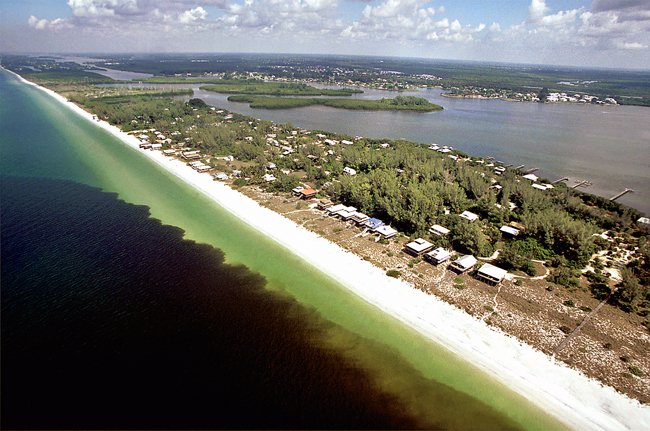
Karenia brevis bloom about to make landfall in Florida.  Image courtesy of P.Schmidt, Charlotte Sun.
Karenia brevis bloom, also known as a red tide, about to make landfall in Florida. These blooms can lead to fish kills, marine mammal deaths, and public health issues. (Credit: P. Schmidt, Charlotte Sun)

Researchers from the National Centers for Coastal Ocean Science (NCCOS) report that this effectis projected to increase substantially by the turn of the century with future increases in atmospheric carbon dioxide. These findings will help inform ecological models, allowing coastal managers to better predict toxin exposure to humans, shellfish, fish, and marine mammals and to optimize efforts to mitigate the adverse effects of these blooms.
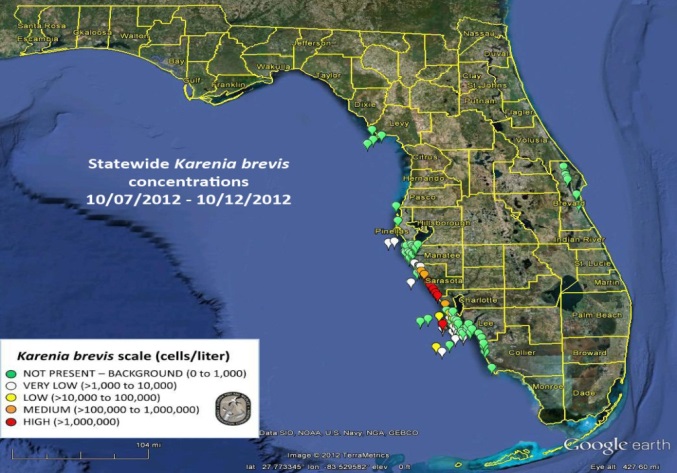
Map showing a high density Karenia brevis bloom reaching the shoreline of the central coast of west Florida. Map courtesy of Florida Fish and Wildlife Conservation Commission.
Map showing a high density Karenia brevis bloom reaching the shoreline of the central coast of west Florida. (Credit: Florida Fish and Wildlife Conservation Commission)

Toxic blooms of the microalga Karenia brevis,also known as harmful algal blooms,occur almost annually along the west coast of Florida and have caused extensive economic and ecological damage.

This study was published in the journal Limnology and Oceanography.

For more information, contact Rance.Hardison@noaa.gov or Bill.Sunda@noaa.gov.