
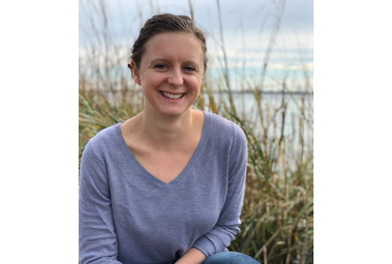
Hounshell works with federal, state, and local scientists, academic partners and stakeholders to understand and predict harmful algal blooms in lakes and coastal regions around the U.S. Specifically, she uses environmental data, satellite remote sensing, and ecological modeling to understand and identify conditions that lead to harmful algal blooms.
Hounshell currently helps to maintain NCCOS’ operational HAB forecasts, develop new HAB forecasts and models, and adapt emerging HAB monitoring techniques to advance HAB forecasting and modeling. She also works with stakeholders and end-users to communicate forecast results and ensure developed products meet their needs.
Hounshell holds a B.S. in Chemistry and Environmental Sciences from the University of Virginia where she studied carbonate chemistry. She then worked as a Staff Chemist at Mote Marine Laboratory where she assisted with a long-term water quality monitoring study in local bays, conducted long-term sensor deployments, and studied the biogeochemistry of Karenia brevis (red tide) blooms. Hounshell then received her Ph.D. from the University of North Carolina-Chapel Hill where she studied organic matter quantity and quality in freshwater and coastal systems. Prior to joining NCCOS, Hounshell was a postdoctoral scholar at Virginia Tech where she used ecosystem experiments, long-term water quality studies, and ecosystem models to understand changes in the carbon cycle due to climate change.