
In an effort to design a water quality monitoring program for the Southeast Florida Coral Reef Initiative (SEFCRI) region, Florida’s Department of Environmental Protection (DEP) met with coastal county representatives andscientists from across NOAA: National Centers for Coastal Ocean Science (NOS), the Atlantic Oceanographic and Meteorological Lab (OAR) and the Habitat Conservation Division (NMFS) at the end of February.
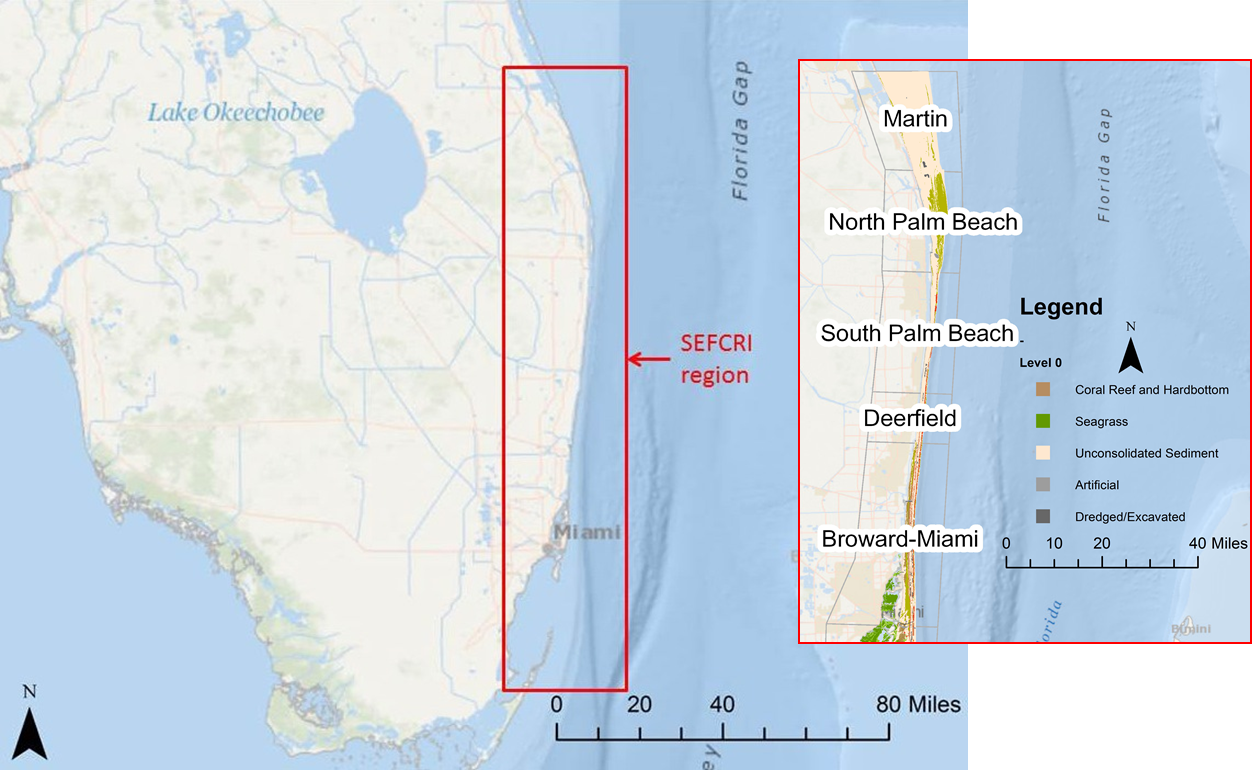
The SEFCRI region, comprised of the reef system located from Martin County to Miami, is potentially exposed to excessive nutrients and sediments that could adversely affect coral reef ecosystems, although there is limited water quality monitoring being conducted. Once the program is initiated, NOAA will be involved in the first two years of water quality sampling (i.e. salinity and nutrient levels, suspended solids, etc.) and data analysis with the goal of transitioning oversight of the program to the Florida DEP.
For more information, please contact Dave Whitall ( dave.whitall@noaa.gov ) or Suzanne Bricker ( suzanne.bricker@noaa.gov ).