
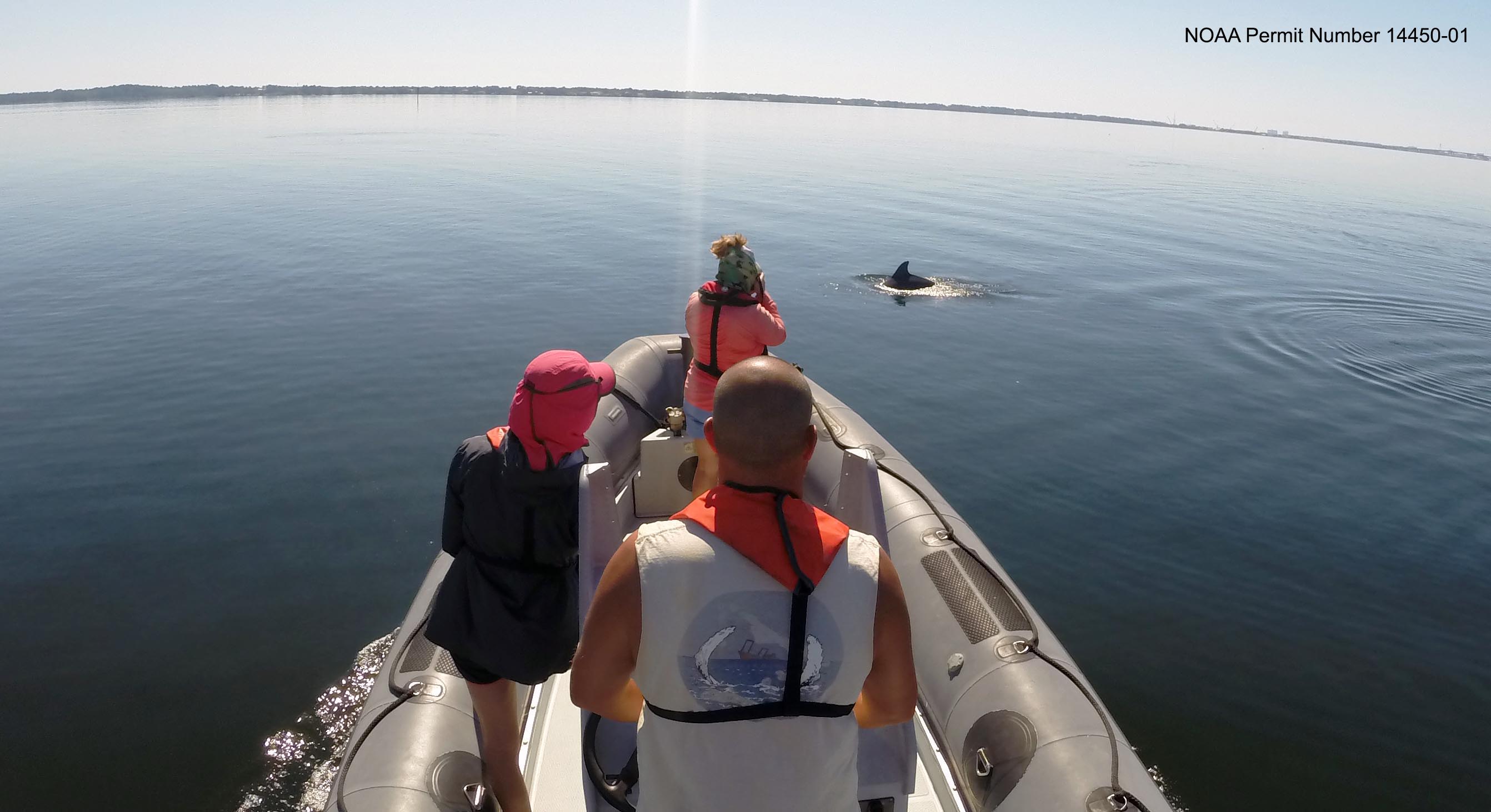
NCCOS researchers recently completed field work to identify the seasonal distribution and abundance of cetacean species in proximity to the Naval Surface Warfare Center in Panama City, Fla.The study – a collaboration among NCCOS, NOAA Fisheries, and the U.S. Navy – will examine whether cetacean distribution is correlated with particular environmental parameters or habitat types, which could aid future planning of marine activities in the area.
Using photo-identification surveys that covered over 135 miles of transect lines within St. Andrew Bay, Fla. and nearshore Gulf of Mexico waters,the researchers documented 215 cetacean sightings, all bottlenose dolphins, in 29 field days during July and October 2015. The team also collected 51 remote biopsies from dolphins to provide baseline samples for genetics, genomics, hormone analysis, and measurement of contaminants.
The study builds on more than 10 years of research that NCCOS scientists and their collaborators have conducted to investigate the effects of harmful algal bloom and chemical pollutant exposure on bottlenose dolphins inFlorida Panhandle waters.