
In recent years, North Carolina estuaries have experienced large fish kills often associated with rains and moderate temperatures. Most of the dead fish have exhibited large, open skin ulcers.
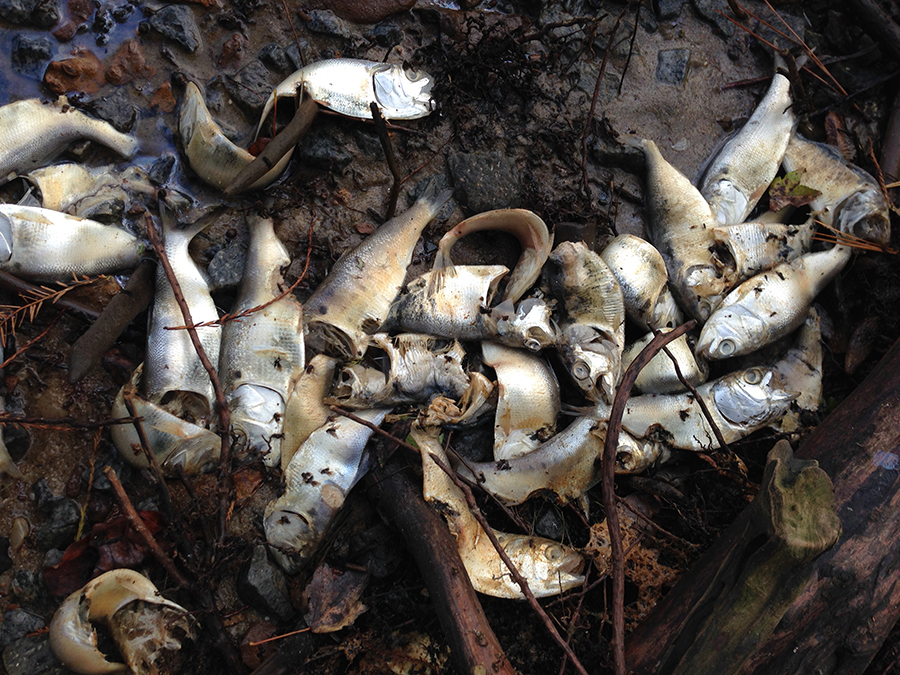
Scientists at NCCOS analyzed the ulceratedfish collected by the North Carolina Department of Environment and Natural Resources (NCDENR) and the Neuse Riverkeeper Foundation using molecular assays and provided a definitive diagnosis of ulcerative mycosis.
Ulcerative mycosis is caused by the water mold Aphanomyces invadans, a fungus-like agent of wild and cultured fish from around the world. Although Aphanomyces invadans causes skin ulcers in fish, which can result in large fish kills; it is not harmful to humans.
The results of the molecular assays and a fact sheet about the water mold infection were communicated to state, non-governmental, and academic partners.
NCCOS has been collaborating with NCDENR on seasonal fish kills since 2006.
For more information contact Wayne.Litkaer@noaa.gov or Mark.W.Vandersea@noaa.gov.