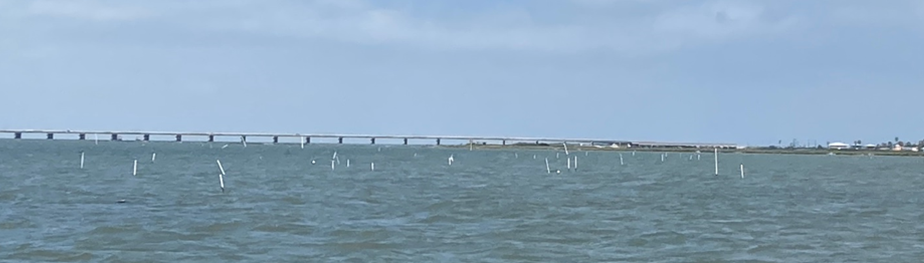
Experimental oyster reefs made from different substrates are the focus of a new fish habitat study in the Mission-Aransas National Estuarine Research Reserve, located 30 miles northeast of Corpus Christi, Texas. Some oyster reefs are built upon old oyster shells, others are created from a bed of river rock or scrap concrete.
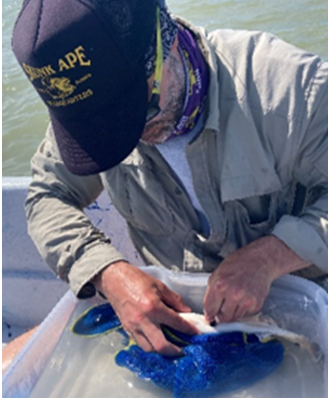
In April and May, NCCOS scientists and their partners installed an array of acoustic receivers within the reserve’s coastal bays and tagged various fish species from these waters with acoustic transmitters. The receivers will continuously detect and record the movements of the tagged fish to help the researchers identify which reef types are most used by important recreational fishery species, such as sea trout and black drum.
The team will track the tagged fish for a little over a year, which will yield sufficient data to understand how fish behavior varies with seasonal changes. Study results will help officials better restore and build future oyster reefs in support of long-term goals for the reserve.
Acoustic telemetry studies have greatly increased the understanding of fish habitat use, migration patterns, and passage through or over human-made structures. Information learned from these studies is widely used in the management and conservation of protected, game, and other fish species and in determining the effectiveness of habitat restoration efforts.
NCCOS conducted this spring’s field work with partners from the University of Texas Marine Science Institute and local fishing guides from FlatsWorthy, Inc.