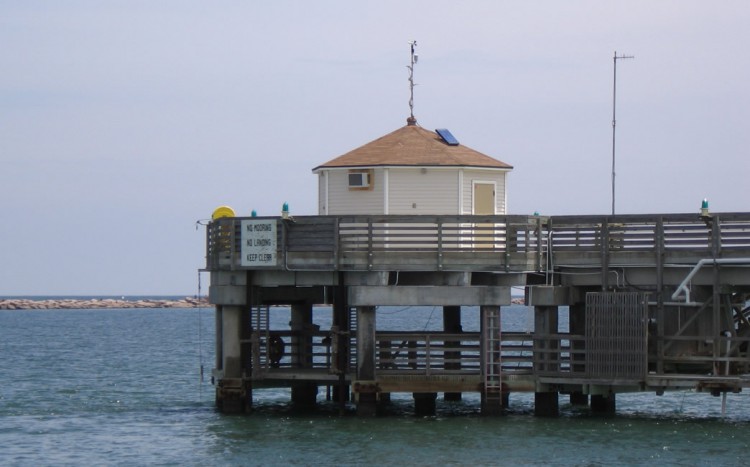
Last week, an NCCOS-funded sensor installed on a Port Aransas pier alerted Texas agencies to rising concentrations of Karenia brevis, the marine dinoflagellate that causes red tides.
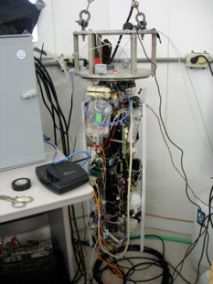
The Texas Parks and Wildlife Department, the Texas Department of State Health Services, and other interested managers received a two-week early warning that a red tide bloom was possible in Corpus Christi’s coastal waters. Cell concentrations at that time were well below the threshold to cause fish kills, discolored water, or respiratory irritation, but high enough to trigger shellfish monitoring to protect human health.
Texas A&M University developed the sensor, called an Imaging FlowCytobot, as part of an NCCOS-supported project. The device continuously collects, identifies, and counts tiny algae in the water using a camera and a laser-based system that detects algae based on their chlorophyll pigment. The instrument compares pictures it takes to images in a harmful algae database. If a match is found and the numbers of the harmful alga exceed a threshold, a warning is sent automatically to researchers and managers.